Orionid Meteor Shower 2026 Reaches Its Peak As Americans Look To The Night Sky For A Celestial Display
Curtis Nakamura|October 22, 2026
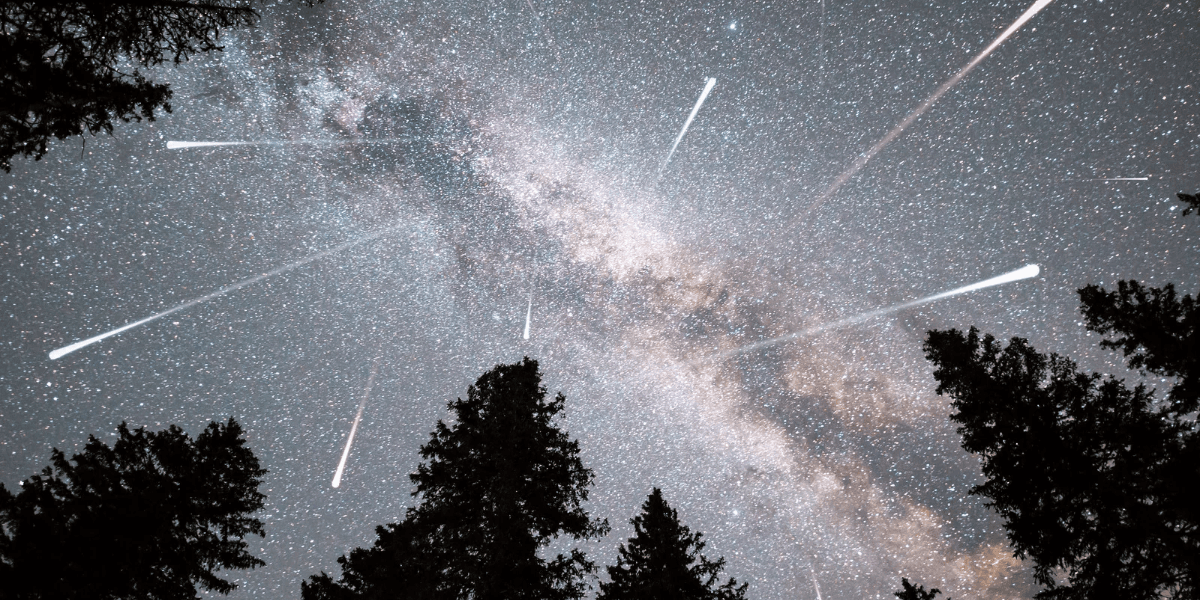
The Orionid meteor shower peaks on October 22, 2026, offering Americans a chance to see meteors created by debris from Halley's Comet.
Across the United States, astronomy enthusiasts turned their attention toward the early morning sky on Thursday, October 22, 2026, as the annual Orionid meteor shower reached its peak. The celestial event offered an opportunity to observe bright streaks of light produced by ancient debris from Halley's Comet. Although moonlight limited visibility in some locations, the shower remained one of October's notable astronomical events. For families, students, and casual observers, the occasion provided an accessible way to experience a natural phenomenon without specialized equipment.
Orionid Meteor Shower 2026 Reaches Its Annual Peak
The Orionid meteor shower reached its predicted peak during the night of October 21 and the early morning of October 22, 2026.
The American Meteor Society identified this period as the shower's strongest expected activity for the year.
The Orionids are active annually from approximately October 2 through November 7, giving observers several weeks to watch for meteors even outside the peak period.
Under favorable conditions, the shower typically produces around 10 to 20 meteors per hour. However, actual viewing rates vary depending on location, weather, moonlight, and surrounding artificial lighting.
The 2026 event faced an additional challenge because the Moon was in a waxing gibbous phase, creating brighter nighttime conditions that could obscure fainter meteors.
Despite this limitation, brighter meteors remained potentially visible to observers in areas with clear skies.
Halley's Comet Creates The Annual Orionid Meteor Shower
The Orionids have a remarkable connection to one of the most recognizable comets in astronomy.
Halley's Comet travels around the Sun approximately once every 76 years, leaving behind small particles of dust and rocky material along its orbital path.
Each October, Earth passes through a region containing some of this debris.
When the particles enter Earth's atmosphere at extremely high speeds, they heat the surrounding air and produce the bright streaks commonly called shooting stars.
These streaks are meteors rather than actual stars.
According to NASA, Orionid meteors travel at approximately 41 miles per second, equivalent to about 66 kilometers per second.
Their remarkable speed can produce bright flashes and occasionally glowing trails that remain visible briefly after a meteor passes.
The Orionids are one of two annual meteor showers associated with Halley's Comet. The other is the Eta Aquariids, which occurs in May.
Moonlight Creates Challenges For Skywatchers In 2026
Although the Orionid meteor shower is known for its fast and sometimes bright meteors, viewing conditions in 2026 were less favorable than during years with darker skies.
The waxing gibbous Moon illuminated much of the night, reducing the contrast between faint meteors and the surrounding sky.
NASA advised observers to look during the hours before sunrise, particularly after the Moon had set.
For many locations in the United States, the period after approximately 3 a.m. offered better viewing opportunities, although exact moonset times varied by location.
Artificial lighting also affected visibility. Bright city environments generally make faint meteors more difficult to see than rural areas with darker skies.
Weather conditions, including clouds and haze, remained another important factor.
Consequently, the predicted meteor rate represented an estimate under favorable conditions rather than a guaranteed number visible to every observer.
Why The Orionids Appear Near The Constellation Orion
The meteor shower takes its name from Orion, one of the most recognizable constellations in the night sky.
During the shower, meteors appear to originate from a region near Orion, although individual streaks can travel across many different parts of the sky.
Astronomers call this apparent point of origin the radiant.
The effect occurs because Earth encounters particles traveling along similar paths, making their streaks appear to converge when viewed from the ground.
Observers do not need to look directly at Orion to see the meteors.
In fact, watching a broad section of the sky often provides a better opportunity to notice longer meteor trails.
This makes the Orionids particularly accessible to people who are unfamiliar with constellations or astronomical equipment.
What The Meteor Shower Means For Science Education
The Orionid meteor shower offers more than an impressive nighttime display.
It provides a practical example of how objects within the solar system interact and how material left behind by comets can produce observable events on Earth.
For students, the shower connects several scientific concepts, including planetary motion, atmospheric physics, and the behavior of comets.
The event also demonstrates that astronomy does not always require expensive instruments or visits to observatories.
Many meteor showers can be observed with the unaided eye, allowing people to participate in skywatching from suitable outdoor locations.
For schools and families, annual events such as the Orionids can encourage interest in space science and help make scientific concepts easier to understand.
How Americans Can Observe Future Meteor Showers
The October 22 peak also offered useful lessons for people interested in observing future astronomical events.
Choosing a location away from bright streetlights can improve visibility, while checking local weather conditions helps determine whether clouds might obstruct the sky.
Observers should allow approximately 20 to 30 minutes for their eyes to adjust to darkness and avoid looking at bright phone screens during that period.
Telescopes and binoculars are generally unnecessary because meteors can appear across large portions of the sky.
For safety, viewers should select a permitted, accessible location and remain aware of their surroundings.
Although the Orionids' strongest predicted activity occurred around October 22, the shower was expected to remain active into early November.
Orionid Meteor Shower Highlights The Wonders Of The Night Sky
The Orionid meteor shower of October 22, 2026, reminded Americans that some of the most fascinating astronomical events can be experienced without advanced technology.
Its connection to Halley's Comet, remarkable meteor speeds, and annual appearance make the Orionids an important event for both professional astronomy and public education.
While moonlight affected viewing conditions this year, the shower remained an opportunity to learn about the movement of Earth through the solar system.
For readers interested in future celestial events, astronomy calendars and official scientific announcements provide useful information about meteor showers, eclipses, and planetary observations.
The Orionids ultimately demonstrate how a simple look toward the night sky can reveal the extraordinary processes taking place far beyond Earth.

LA Highlight Contributor
Covers technology, business, and national affairs, following the companies and policy shaping the region.
This article features partner, contributor, or branded content from a third party. Members of the LA Highlight editorial staff were not involved in the creation of this content. All views and opinions are those of the contributor alone.