
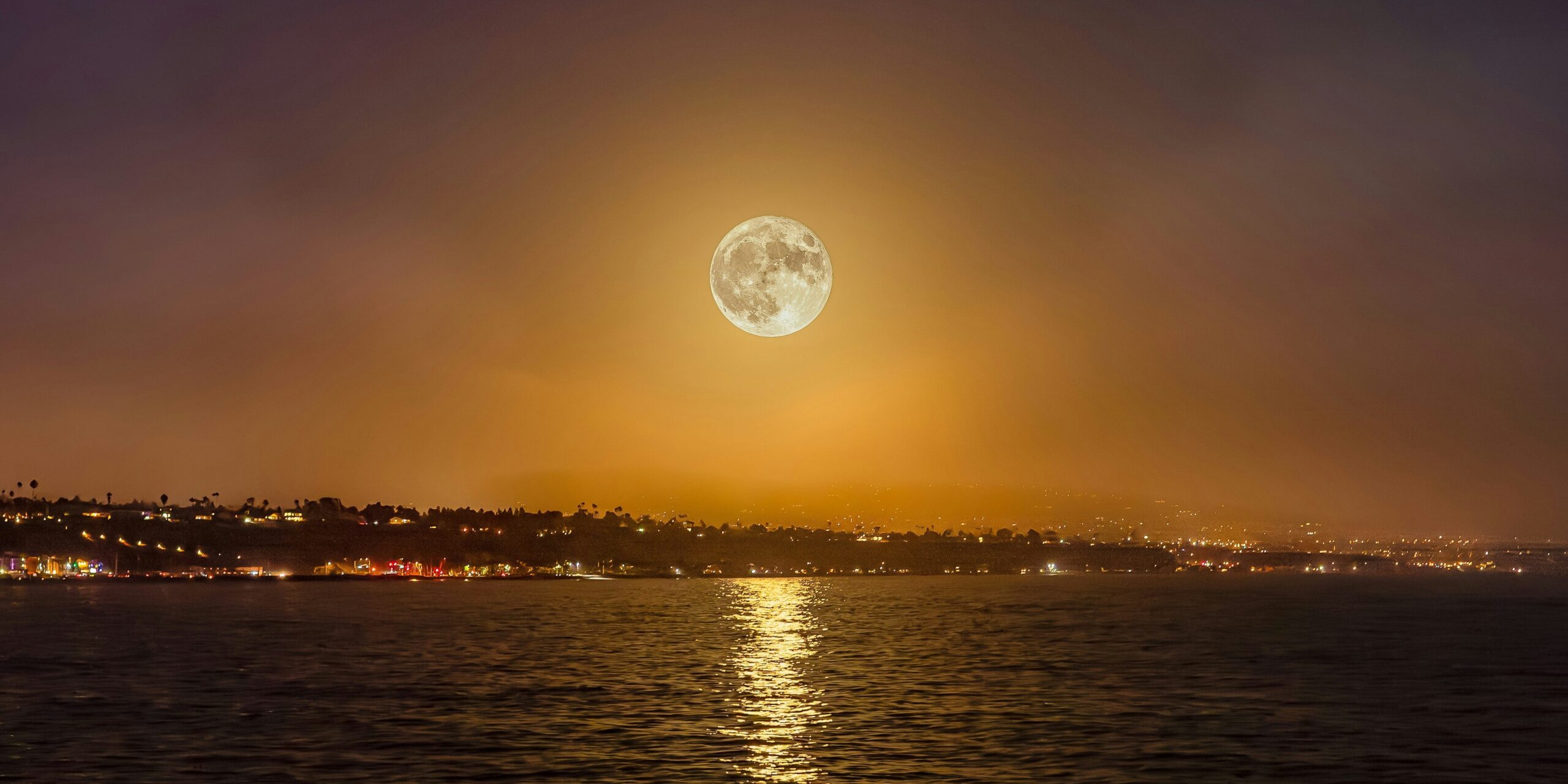
On January 3, 2026, the first full moon of the year, traditionally referred to as the Wolf Moon, captured the attention of sky-watchers across the United States. This celestial event, which peaked in the early hours of Saturday, brought a dazzling display to the night sky. Known for its stunning brightness and size, the Wolf Moon was especially captivating this year as it was classified as a supermoon. This meant that the moon was at its closest point to Earth in its orbit, causing it to appear slightly larger and brighter than usual. The phenomenon offered an extraordinary opportunity for sky enthusiasts to witness one of the most visible lunar occurrences of the year.
Weather conditions across many regions of the U.S. were favorable for viewing, providing clear skies that allowed both amateur astronomers and casual sky-watchers to fully enjoy the spectacle. Across the country, from bustling urban rooftops to quiet rural areas, people looked up in awe at the luminous glow of the full moon. Some observers used telescopes to gain a closer look at its surface, revealing its craters and features with greater detail, while others simply enjoyed the grandeur of the sight with the naked eye. Photographers and social media users also took full advantage of the moment, sharing images of the bright, glowing moon, capturing its beauty and marking the event as a moment to remember.
The Wolf Moon has held cultural and historical significance for centuries, making it more than just a beautiful astronomical event. Named after the howling wolves that were often heard during the harsh winter months, this full moon has roots in Native American traditions. The howls of wolves, commonly associated with the colder and more challenging months of winter, were thought to be most prominent around the time of this particular moon. Over the years, the Wolf Moon has become a symbol of the changing seasons and a reminder of the deep connection between humans and the natural world. For many, observing the Wolf Moon is not only a way to enjoy the beauty of the night sky but also an opportunity to reflect on the traditions and stories that have been passed down through generations.
Read Also: https://lahighlight.com/midland-michigan-hosts-vibrant-community-events-in-october/
For amateur astronomers, the Wolf Moon of 2026 presented an ideal opportunity to observe the moon’s surface and its many features. With the moon so close to Earth, its details were easier to make out, creating an even more rewarding experience for those who took the time to explore its surface. Many people also turned to their telescopes, eager to observe its craters and maria — the dark, flat plains of the moon’s surface that are visible to the naked eye. Others simply enjoyed the spectacle for what it was — a stunning natural event that highlighted the vast beauty of the universe.
Social media platforms were filled with images of the Wolf Moon, as enthusiasts shared their experiences with friends and followers. The supermoon quickly became a trending topic, with people around the country exchanging photos and stories of their viewings. The event also sparked conversations about other upcoming celestial phenomena, as many sky-watchers look forward to the next opportunity to connect with the cosmos.
In addition to its astronomical and cultural significance, the Wolf Moon serves as a reminder of the ever-changing nature of the sky. It marks a moment in time when people from all walks of life can come together to share in the wonder of the natural world. Whether through stargazing, photography, or simply taking a moment to appreciate the beauty above, the Wolf Moon of 2026 offered a shared experience that brought joy to many.
As the year progresses, sky-watchers will undoubtedly continue to look to the heavens for more awe-inspiring celestial events, but the Wolf Moon will remain a highlight of the winter months. It was a stunning start to the year’s sky-watching calendar, offering a glimpse of the beauty and majesty that the universe has to offer. For many, it was a moment of connection to something greater — a reminder of the vastness of the cosmos and the shared experiences that unite us all in wonder.